
Why Most Bathroom Heaters Short Out (And How We Actually Fix It)
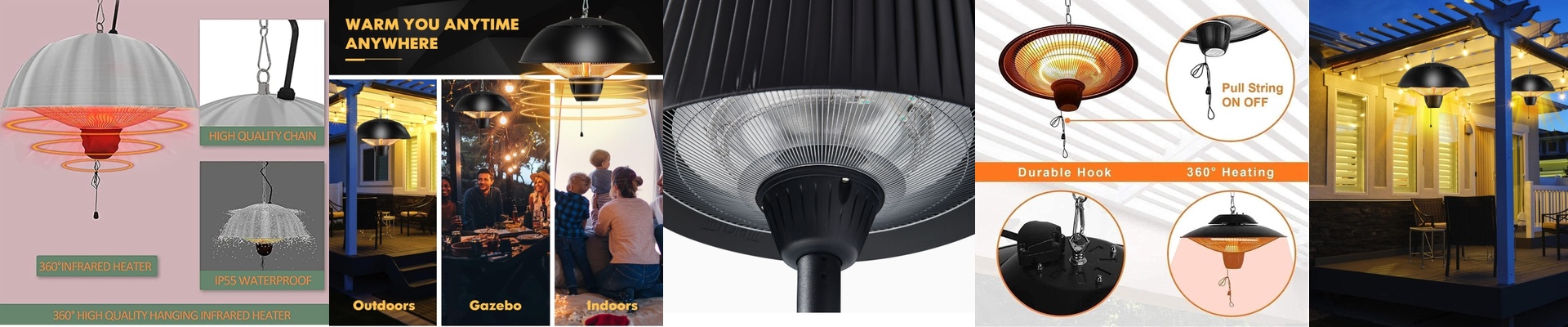
Let’s be honest: bathroom infrared heaters live in a nightmare. You’ve got thick steam, random water splashes, and intense heat all hitting the same spot—the lead-wire junction. Most budget heaters just can’t handle it. The insulation cracks, moisture sneaks in, and suddenly your heater is a paperweight. Or worse, it shorts out.
The problem with “standard” seals
Here is the thing about where the electrical wire meets the heating element. It’s the weakest link. Most cheap units just use a basic bead of silicone. It looks fine at first, but then the heater starts working. It gets hot, expands, cools down, and shrinks. Do that a few hundred times and that silicone bond just gives up. Once a tiny crack opens up, steam rushes in. And once the moisture is inside, it’s game over. We do things differently. Instead of a quick dab of glue, we use a multi-stage process. We start with a high-temp ceramic potting compound and wrap it in a hydrophobic outer sheath. It creates a mechanical lock that doesn’t peel or flake, no matter how hot it gets.
The “invisible” difference
You might wonder why “OEM-grade” actually matters. It comes down to air. Cheap assembly lines skip a step called vacuum-degassing. Basically, they leave tiny air bubbles trapped in the sealant. When the heater hits its peak temperature, those bubbles expand and pop. Now you’ve got a direct highway for moisture to reach the electrics. Our seals are void-free. We use fluoropolymer insulators that can take a beating at 200°C+ without turning brittle. This means the wires won’t rub against the chassis and burn through—which is a huge relief for anyone who cares about safety.
The balancing act
But here’s the tricky part: you can’t just seal everything in a thick block of plastic. If you over-seal the wire to keep water out, you end up trapping too much heat inside the copper core. It’s a bit of a tug-of-war between keeping it waterproof and letting it breathe. We spend a lot of time tweaking the thermal conductivity of our materials. The goal is a seal that’s airtight but still lets the wire stay at a safe temperature. It’s not the easiest way to build a heater, but it’s the only way to make sure it actually lasts.