
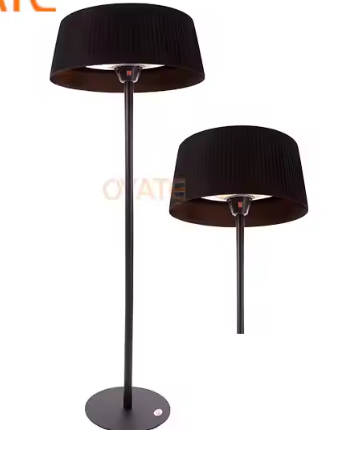
The Secret to Why Some Infrared Heaters Actually Last
Here is a dirty little secret about outdoor heaters: most of them don’t fail because the main body breaks. It’s almost always the lead-wire entry point. Think about it. These heaters go through a brutal cycle—blasting heat one minute and freezing in the wind the next. That spot where the electrical wire meets the heating element takes a beating. Cheap heaters just use basic silicone or a flimsy gasket. Those things dry out fast. They crack. And the second that seal gives way, moisture sneaks in, hits the high-voltage terminals, and—pop—you’ve got a short circuit.
The “Pumping” Problem
It’s basic physics, really. Heat makes things expand; cold makes them shrink. When a heater cycles on and off, it creates this “pumping effect.” It literally sucks moisture into the wiring. Most off-the-shelf parts ignore this. They use materials that don’t move at the same rate as the wire jacket, leaving a tiny gap. We do things differently. We use industrial potting compounds that actually bond chemically to the lead. It keeps everything tight and sealed, even after the first hundred heat cycles. No gaps. No leaks.
Why the “Craft” Part Matters
You can’t just slide a waterproof sleeve over a wire and call it a day. That’s not how you get a real seal. It takes a bit more work. We’re talking precision stripping, a layer of high-temp dielectric grease, and a vacuum-sealed potting phase. It sounds like a lot, but it’s the only way to make sure the connection stays bone-dry when the casing is hitting 200°C while it’s snowing outside. If you use a sealant that isn’t built for those swings, it just turns brittle and flakes away. That’s usually when the sparks start flying.
One Small Catch
There is a trade-off, though. Because the seal is so tight, the lead wires are a bit more rigid. You can’t just bend them at a sharp angle during install, or you might stress that internal seal we worked so hard to build. Do your installation team a favor: give the wires a generous drip loop. It keeps water from pooling right at the entry point. Just handle them with a bit of care, and the factory seal will do its job for years.